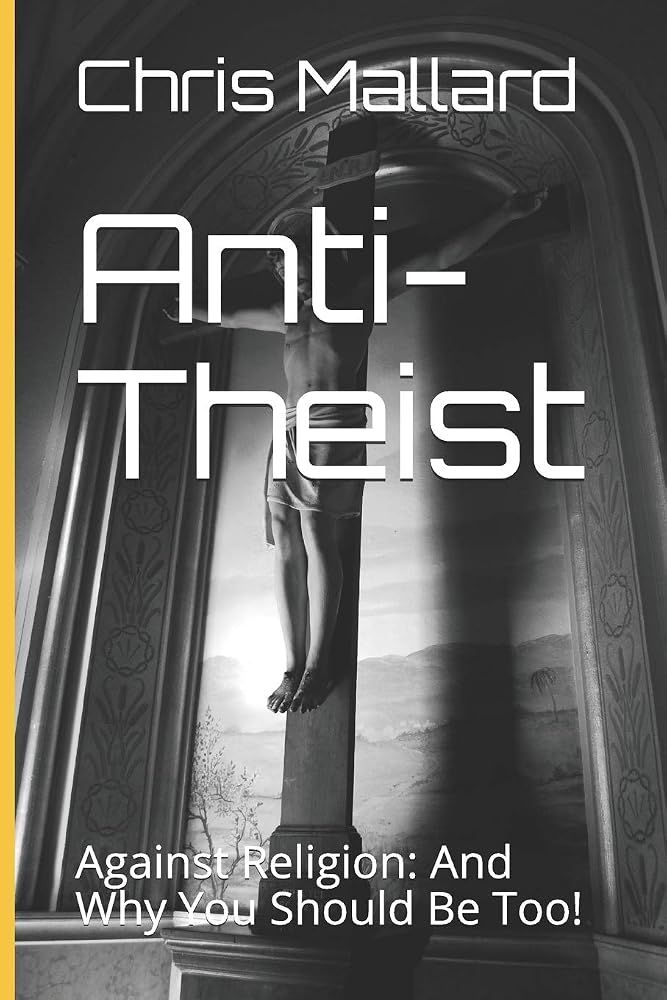
Book 1 of 8 – The Hideous Face of God
Christianity presents God as love itself – but the biblical portrait is of a being who personally drowned nearly every human on earth, ordered the slaughter of entire nations including infants, and promises to torture the majority of humanity for eternity. The Sunday school face and the biblical face are not the same entity.
1. The Friendly Face and the Monster Behind It
The Argument
Christianity markets God as love itself – 1 John 4:8 – but the full biblical portrait is of a being who personally drowned nearly every human and animal on earth, ordered the slaughter of entire nations including infants, and promises to torture the majority of humanity for eternity. The Sunday school face and the biblical face are not the same entity.
Key Scriptures
What Christians Claim
God is infinitely good and just. His actions in the Old Testament must be understood in their historical and theological context.
The Response
Context cannot transform infanticide into a moral act. A parent who drowned their children would be imprisoned regardless of context. Calling God’s equivalent actions “just” because he is God is not a moral argument – it is moral surrender dressed in theological language.
2. The Horror Forms
The Argument
The biblical God is documented killing children via bear mauling for mockery (2 Kings 2:23 – 24), opening the earth to swallow whole families alive (Numbers 16), raining fire on cities, and instructing soldiers to rip open pregnant women (2 Kings 15:16). These are not metaphors – they are presented as praiseworthy divine acts.
Key Scriptures
What Christians Claim
“His ways are higher than our ways” (Isaiah 55:8-9). These were righteous judgments against sin.
The Response
“His ways are higher” is a non-answer that immunizes any action from moral scrutiny. By this logic, no action God takes can ever be wrong – which makes the claim that God is good completely meaningless. Good and evil only matter if they apply consistently.
3. God Says So Himself
The Argument
The Bible does not hide God’s violence – it celebrates it. God describes himself as a man of war (Exodus 15:3), a jealous and consuming fire (Deuteronomy 4:24), one who renders vengeance and repays those who hate him (Deuteronomy 32:41 – 42). These are God’s own self-descriptions, not critics’ characterizations.
Key Scriptures
What Christians Claim
These passages describe God’s righteous power over evil, not arbitrary cruelty.
The Response
Drinking the blood of enemies and repaying hatred with slaughter are God’s own words about himself. If a human leader described himself this way, we would call it a confession of cruelty, not a defense of righteousness.
4. The Peace Option Never Taken
The Argument
An omnipotent God who can create a universe could theoretically have chosen to communicate, persuade, or simply forgive at any point. Instead the biblical record documents repeated choices for mass death over alternatives. The Flood could have been a mass healing. The Egyptian plagues could have been a single conversation. Omnipotence means violence was always a choice, never a necessity.
Key Scriptures
What Christians Claim
God was patient for generations before sending judgment. The people refused to repent.
The Response
An omnipotent being is not constrained by human refusal to repent. Creating humans predisposed to sin and then destroying them for sinning is not patience – it is a closed loop with a predetermined outcome.
5. The Punishments Don’t Fit
The Argument
Gathering sticks on the Sabbath earns death (Numbers 15:32 – 36). A woman who grabs a man’s genitals to help him in a fight loses her hand (Deuteronomy 25:11 – 12). A disobedient son is stoned by his community (Deuteronomy 21:18 – 21). These are not culturally extreme – they are morally incoherent regardless of era.
Key Scriptures
What Christians Claim
These laws established social order in an ancient culture with no police or prison system.
The Response
Social order does not require executing a man for collecting firewood. The argument that any punishment is acceptable given the era’s infrastructure is a cultural relativism that Christians typically reject when applied to other ancient practices.
6. The Conquest Playbook
The Argument
The book of Joshua documents the systematic ethnic cleansing of Canaan on divine orders. Every man, woman, child, and animal was to be killed. The text presents this not as a regrettable necessity but as obedience – and Saul is punished not for killing, but for failing to kill completely (1 Samuel 15).
Key Scriptures
What Christians Claim
The Canaanites were deeply wicked, practicing child sacrifice and other abominations that corrupted the culture.
The Response
The infants and livestock practicing child sacrifice are not identified. Collective punishment of an entire people including babies based on the practices of adults is the definition of a war crime under any modern ethical framework – including the one Christianity claims to uphold.
7. The Moral Accounting
The Argument
If we apply consistent moral accounting – holding God to the same standards Christians apply to human rulers – the biblical God is responsible for more deaths than any villain in human history. The Flood alone eliminates virtually the entire human race. This is not a peripheral detail; it is the central act of God’s early relationship with humanity.
Key Scriptures
What Christians Claim
God is the author of life and has sovereign right over it.
The Response
The claim that God has sovereign right to kill is not a moral defense – it is a property claim. Saying God can kill anyone because he created them is equivalent to saying a parent owns their child’s life. Most moral systems explicitly reject this reasoning.
8. Jesus the PR Man – The Protection Racket
The Argument
Jesus’s contribution to the God-problem is not to fix it but to expand it. He introduces eternal conscious torment – hell – as the fate of the majority of humanity (Matthew 7:13 – 14). He threatens those who reject him with a worse fate than Sodom (Matthew 10:15). He does not soften God; he gives him a marketing upgrade and a new punishment.
Key Scriptures
What Christians Claim
Jesus also preached love, forgiveness, and salvation for all who believe.
The Response
Salvation “for all who believe” is not universal salvation – it is conditional rescue from a threat Jesus himself maintains. The preacher who offers protection from a danger he controls is not a savior. He is running a protection racket.
9. Your Eternal Destination
The Argument
The Christian God sentences the majority of humanity – including those who never heard the gospel, those raised in other traditions, and those who examined the evidence and found it insufficient – to eternal conscious torment. This is the default outcome. It is also the creation of a being who knew it would happen before creating anyone.
Key Scriptures
What Christians Claim
God gives everyone sufficient grace to respond. Those condemned have rejected him by their own free choice.
The Response
A being who creates people knowing they will be damned, and then damns them anyway, is not exercising justice. It is engineering a predetermined outcome and then assigning blame to the engineered product.
10. The Sanitization Project
The Argument
The reason most Christians don’t recognize this portrait of God is that it has been systematically sanitized. Sermons skip the genocide passages. Children’s Bibles omit the commands to kill infants. The loving God is preached; the raging God is theologized away. This is not bad reading – it is the result of a centuries-long institutional project to make a monster palatable.
Key Scriptures
What Christians Claim
Christians read the whole Bible. The difficult passages are addressed in seminaries and commentaries.
The Response
They are addressed, not answered. A seminary explanation of why God commanded infant slaughter is not a moral defense – it is an intellectual scaffold built around an act that would be universally condemned if a human leader had ordered it.