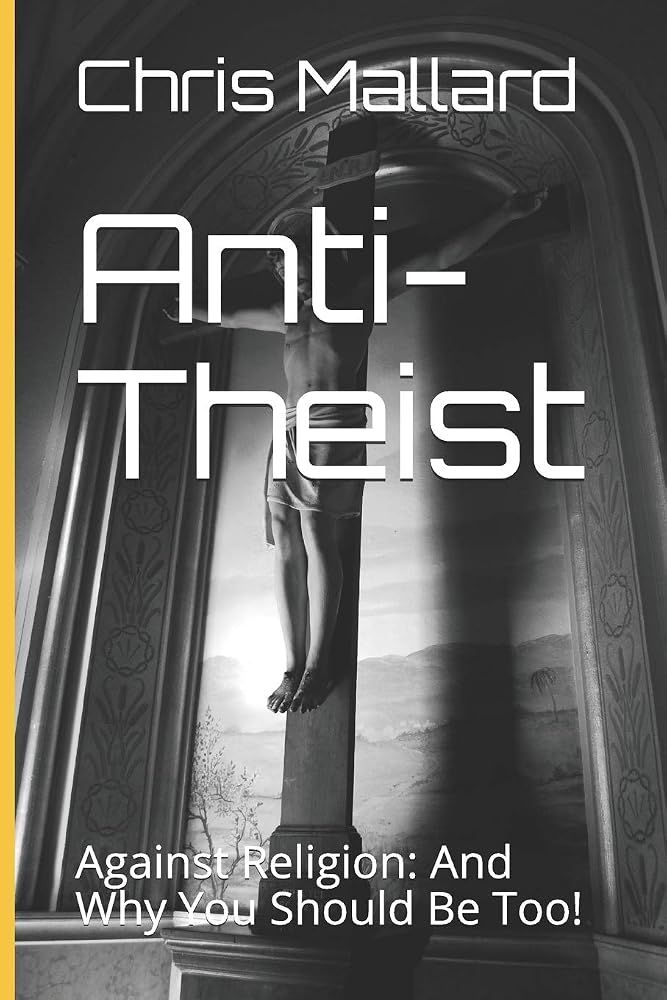
Book 4 of 8 – Christianity as a Blood Cult
“Without the shedding of blood there is no forgiveness” (Hebrews 9:22). The entire transactional system between humans and God runs on blood. Christians drink blood weekly. Guilt is transferred from the guilty to the innocent through ritual killing. By any external definition, this is a blood cult.
1. The Ancient Blood Ritual System
The Argument
The Levitical sacrificial system is a blood management system. Animals are killed, their blood is collected and applied to altars, priests, and people as the mechanism of atonement (Leviticus 17:11). “Without the shedding of blood there is no forgiveness” (Hebrews 9:22). The entire transactional system between humans and God runs on blood. This is the defining feature of a blood cult.
Key Scriptures
What Christians Claim
Blood in the sacrificial system represents life – it is a life-for-life substitution, not a fixation on gore.
The Response
Calling it “life” rather than “blood” is a semantic reframe that doesn’t change what happens. Animals are killed. Their blood is applied to surfaces. The mechanism is the killing and the blood application. Whatever its symbolism, it is functionally a blood ritual system.
2. Innocent Harmed for the Guilty
The Argument
The central mechanism of the sacrificial system is moral transfer: a person who has sinned brings an innocent animal, lays their hand on it, kills it, and the sin is transferred. The animal did nothing. The animal is killed for the human’s offense. This is not justice – it is the sacrifice of the innocent for the guilty. It is the structural foundation of what became the theology of the cross.
Key Scriptures
What Christians Claim
Substitutionary atonement reflects God’s justice – sin must be punished – combined with his mercy: he provides the substitute.
The Response
“God provides the substitute” means God kills an innocent party to satisfy a standard he set. This is not justice. It is a closed loop in which God creates the standard, enforces the standard by killing the innocent, and calls this mercy. The innocent animal does not benefit from the arrangement.
3. The License Problem
The Argument
A system in which sin can be ritually transferred to an innocent party and eliminated through that party’s death creates a structural incentive to sin. If forgiveness is always available – if Jesus’s sacrifice covers all sin for all time – then there is no ultimate consequence for behavior, only the requirement of belief. Paul addresses this directly in Romans 6:1. The question was being asked because the system created the incentive.
Key Scriptures
What Christians Claim
Paul explicitly rejects the license conclusion – “By no means!” Grace motivates holiness, not sin.
The Response
Paul’s rejection of the conclusion does not eliminate the structural problem. The theological architecture provides perpetual forgiveness for belief. The pastoral response – “please don’t” – is not a structural solution. It is an appeal that the system itself does not enforce.
4. The Scapegoat
The Argument
Leviticus 16 introduces the literal scapegoat. On the Day of Atonement, the high priest lays his hands on a live goat, confesses the sins of Israel over it, and sends it into the wilderness carrying those sins. This is sympathetic magic – the belief that moral guilt can be physically transferred to an animal by touch and removed by the animal’s departure. It is the same ritual logic as voodoo.
Key Scriptures
What Christians Claim
The scapegoat ritual was a divinely ordained type pointing to Christ, who would bear the sins of humanity.
The Response
Calling it a “type” does not remove it from the category of sympathetic magic. It confirms it. The logic – guilt can be physically transferred from guilty to innocent by ritual action – is the same in the Levitical ritual and in the theology of the cross. The only difference is the scale.
5. Blood Themes in Christian Theology
The Argument
Christian theology is saturated with blood at the doctrinal level. The blood of Christ justifies (Romans 5:9). The blood of Christ cleanses from sin (1 John 1:7). Believers are redeemed “with the precious blood of Christ” (1 Peter 1:18 – 19). The new covenant is established “in my blood” (Luke 22:20). Blood is the transactional currency of Christian soteriology.
Key Scriptures
What Christians Claim
Blood in Christian theology represents the life of Christ given for humanity – it is a profound symbol of sacrificial love.
The Response
It is also, literally, blood. The symbol requires the substance. Calling it “profound” does not change the fact that the theology requires a blood payment. The symbolism is downstream of the transaction, not a replacement for it.
6. Blood Themes in Christian Practice
The Argument
Christians drink blood – symbolically or literally, depending on denomination – every week. The Eucharist requires participants to consume the body and blood of Jesus. Catholic theology holds that the wafer and wine become literally flesh and blood (transubstantiation). Either way, ritual consumption of blood is a core sacramental practice of the world’s largest religion.
Key Scriptures
What Christians Claim
The Eucharist is a memorial of Christ’s sacrifice, celebrated in obedience to his command. Its meaning is spiritual, not cannibalistic.
The Response
“Spiritual” does not mean “not blood.” Jesus says “my blood” in reference to the cup. Paul calls it “the cup of blood of Christ.” The spiritual meaning is carried by the blood reference, not separate from it. Weekly ritual consumption of blood is a blood cult practice regardless of its spiritual significance.
7. The Guilt Transfer Problem
The Argument
Guilt transfer – the theological mechanism by which someone else’s righteousness is credited to you and your sin is transferred to them – is morally incoherent. If I commit a crime and my innocent friend goes to prison instead, justice has not been served. Society recognizes this. Punishing the innocent for the guilty is injustice – regardless of whether the innocent party volunteers.
Key Scriptures
What Christians Claim
Imputed righteousness is a legal and relational concept – it reflects God’s grace in crediting Christ’s perfect life to believers.
The Response
In no human legal system is this recognized as justice. If a murderer’s lawyer argued that a saint should be executed instead – volunteering willingly – the court would not accept it. The Christian system asks us to accept as the foundation of divine justice what any human court would recognize as a perversion of it.
8. The Repeat Offender Problem
The Argument
If sin is perpetually forgivable through ongoing confession and the once-for-all sacrifice of Christ, there is no structural limit on repeat offending. The same sin can be committed, forgiven, committed, and forgiven indefinitely. 1 John 1:9 says “if we confess our sins, he is faithful and just to forgive.” It does not say “if we confess sins we haven’t committed before.” The structural promise is unlimited.
Key Scriptures
What Christians Claim
True repentance involves turning from sin, not just confessing it. A pattern of unrepentant sin calls one’s salvation into question.
The Response
This response acknowledges the problem by trying to define repentance out of existence for repeat offenders. The structural promise is unlimited. The pastoral warning is a verbal patch on a structural hole.
9. The Psychological Damage
The Argument
A theological system built on blood, guilt, sacrifice, and the transfer of moral responsibility produces measurable psychological effects. It trains adherents to experience their existence as fundamentally sinful and dependent on external cleansing. It replaces internal moral development with ritual absolution. It builds identity on unworthiness – “I am a sinner saved by grace” – which is a psychologically destructive foundation for selfhood.
Key Scriptures
What Christians Claim
The Christian message is one of redemption and dignity – God considers humanity worth saving. This builds hope, not shame.
The Response
The hope is conditional on accepting the shame first. You must accept that you are fundamentally broken, guilty, and deserving of death before the rescue is offered. The rescue is real in the framework – but the framework requires the pathology as an entry fee.
10. The Verdict
The Argument
By any external definition, Christianity is a blood cult. It has a founding blood sacrifice at its center. Its primary sacrament involves the ritual consumption of blood. Its theology depends on blood payment for moral debt. Its core mechanism transfers guilt from the guilty to the innocent through ritual. These are the defining features of a blood cult. The label is not a slur – it is a description.
Key Scriptures
What Christians Claim
Christianity is a religion of love and relationship with God. The blood language is symbolic of sacrifice and devotion, not a primitive ritual system.
The Response
Symbolic of sacrifice is still about sacrifice. Devotion expressed through blood – whether literal or symbolic – is blood cult devotion. The presence of love alongside blood does not remove the blood. It is a religion of love and blood. Both parts of the description are accurate.