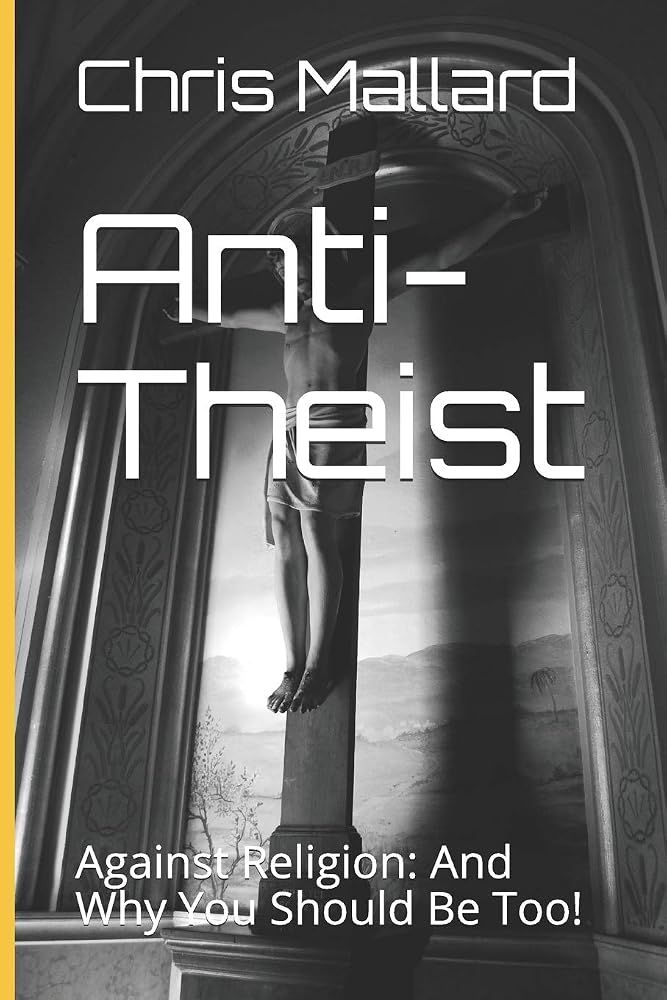
Book 3 of 8 – Christianity’s Child Sacrifice Problem
God commands the firstborn. He kills the firstborn of Egypt himself. He tests Abraham by commanding him to sacrifice Isaac. He allows Jephthah’s daughter to be sacrificed without intervention. He frames his own salvation plan as the sacrifice of his son. Child sacrifice is not peripheral to the biblical narrative – it is structural.
1. What Sacrifice Actually Means
The Argument
Before making the case, we must define the term. A sacrifice is the killing of something or someone of value as an offering to a deity. This definition is not controversial – it is how the Bible uses the word. The question is not whether sacrifice exists in the Bible. It does, extensively. The question is whether children are the victims.
Key Scriptures
What Christians Claim
Sacrifice in the Bible is a highly regulated religious practice – not murder. The context matters.
The Response
Context is exactly what we are examining. The regulated nature of the practice does not remove it from the category of sacrifice – it confirms it. The question is who the victims are and whether they include children.
2. God Commands It
The Argument
Exodus 22:29 – 30 reads: “The firstborn of your sons you shall give to me.” The verse is grammatically parallel to commands to offer firstborn animals. Ezekiel 20:25 – 26 explicitly states God gave statutes that were not good, and defiled the people through their firstborn offerings. The Bible’s own prophetic tradition acknowledges the command existed.
Key Scriptures
What Christians Claim
Exodus 22:29 – 30 was interpreted as the redemption of the firstborn through payment, not literal sacrifice (Exodus 34:20).
The Response
The later clarification exists because the original command was ambiguous or disturbing enough to require it. Ezekiel 20:25 – 26 – written centuries later – explicitly acknowledges that God gave laws that were not good, including firstborn offerings. The biblical text itself contains the contradiction.
3. They Were Doing It
The Argument
2 Kings 16:3 records King Ahaz making his son “pass through the fire.” 2 Kings 21:6 records Manasseh doing the same. Psalm 106:37 – 38 documents the practice directly. Jeremiah 7:31 has God saying they burned their children “which I did not command” – conceding the practice was real, while Ezekiel 20:25 – 26 contradicts that denial.
Key Scriptures
What Christians Claim
Child sacrifice was a pagan Canaanite practice the Israelites adopted in rebellion against God, who explicitly forbade it.
The Response
Jeremiah says God did not command it. Ezekiel says God did give statutes involving firstborn offerings. The text contradicts itself on whether God commanded it. The practice was real – the Bible records it as practiced by Israel’s own kings, not just pagans.
4. God Does It Himself
The Argument
The final plague in Egypt is the direct killing of the firstborn child of every household – from Pharaoh’s son to the firstborn of the prisoner in the dungeon (Exodus 11:5). The children did not enslave the Israelites. The children did not harden their hearts. The children were killed because of their fathers. This is collective punishment of the youngest – by God – at scale.
Key Scriptures
What Christians Claim
God warned Pharaoh repeatedly and Pharaoh refused to relent. The plagues were judgment on Egypt’s leadership.
The Response
The firstborn of the dungeon prisoner (Exodus 11:5) had no role in the enslavement. Collective punishment of children for the sins of their society’s leadership is not justice – it is the very thing God’s own law elsewhere forbids (Deuteronomy 24:16).
5. Abraham and Isaac
The Argument
God commands Abraham to sacrifice his son Isaac as a burnt offering (Genesis 22:2). Abraham proceeds to the point of raising the knife. God stops him at the last moment. Christianity celebrates this as a test of faith. But a deity who commands a father to kill his child – even as a test – has given a command to commit child sacrifice. The intervention does not erase the command.
Key Scriptures
What Christians Claim
God never intended for Isaac to die. It was a test of Abraham’s faith and a foreshadowing of Christ.
The Response
“He never intended it” is not exculpatory if the command itself was genuine. If God commanded Abraham to murder his son, the command to commit child sacrifice was real, regardless of the outcome. A god who tests faith by commanding infanticide has made child murder a legitimate religious act.
6. Jephthah’s Daughter
The Argument
Judges 11:30 – 40. Jephthah vows to God that if God gives him victory in battle, he will sacrifice whatever comes out of his house first. His daughter comes out first. He sacrifices her. The text presents this as a tragedy – but does not say God rejected the sacrifice. It records that he “did with her according to his vow.” God does not intervene.
Key Scriptures
What Christians Claim
Jephthah’s vow was rash and foolish. Some scholars argue she was dedicated to temple service rather than killed.
The Response
The text says Jephthah “did with her according to his vow” – the vow that said he would offer her as a burnt offering. The “temple service” interpretation is a 12th-century harmonization with no textual basis. And God, who intervened for Isaac, did not intervene here.
7. 2 Kings 3 – The Sacrifice That Won
The Argument
Israel, Judah, and Edom attack Moab. Moab’s king is losing. He takes his firstborn son and sacrifices him on the wall as a burnt offering. Immediately after, “great wrath came against Israel” and Israel withdrew from a winning position. The child sacrifice worked. It changed the military outcome. The Bible records this without condemnation.
Key Scriptures
What Christians Claim
“Great wrath” likely refers to the wrath of the Israelites or the shame of the situation, not divine response to the sacrifice.
The Response
The Hebrew does not specify whose wrath – and Israel’s withdrawal from a winning campaign is presented as a direct result of the sacrifice. The most natural reading is that the sacrifice achieved its intended effect. The text does not condemn it.
8. John 3:16
The Argument
“For God so loved the world that he gave his only begotten son, that whoever believes in him shall not perish but have eternal life.” God gives (sacrifices) his son (a child of God) to appease divine wrath and offer salvation. Under the same definition of sacrifice that applies throughout this book, this is child sacrifice. The theology of the cross is the theology of child sacrifice.
Key Scriptures
What Christians Claim
The crucifixion is not child sacrifice – it is a willing, adult, divine act of love freely chosen by Jesus.
The Response
The objection that Jesus was willing does not apply to Genesis 22, where Isaac’s willingness is not mentioned. The objection that Jesus was an adult does not apply to the Egyptian firstborn. The framework that makes the cross sacred applies equally to the other texts in this book.
9. The Through-Line
The Argument
The through-line is not that Israel occasionally adopted pagan child sacrifice. It is that the biblical text contains a God who commands the firstborn, rewards child-sacrificing faith, performs child sacrifice at the Exodus, tests his most faithful servant by commanding child sacrifice, allows child sacrifice to achieve military victory, and frames his own salvation narrative as the sacrifice of his son. The practice is structural.
Key Scriptures
What Christians Claim
The Old Testament practices pointed toward Christ, who ended the sacrificial system once and for all.
The Response
Saying Christ ended child sacrifice by being the final child sacrifice does not remove child sacrifice from the center of the system. It makes it the climax of the system.
10. The Verdict
The Argument
By the Bible’s own definition of sacrifice, and using only texts the Bible presents as authoritative, the God of the Bible has a documented relationship with child sacrifice that includes commanding it, performing it, rewarding it, and accomplishing it as the capstone of his salvation plan. Christianity does not worship a God who opposes child sacrifice. It worships a God whose central saving act is one.
Key Scriptures
What Christians Claim
The sacrificial system was fulfilled and completed in Christ. No Christian advocates for child sacrifice today.
The Response
No contemporary Christian advocates for it. But the theological framework they inhabit places a child sacrifice at its center and retroactively sanctifies the practice as foreshadowing. The verdict is not about contemporary practice. It is about the architecture of the belief system.