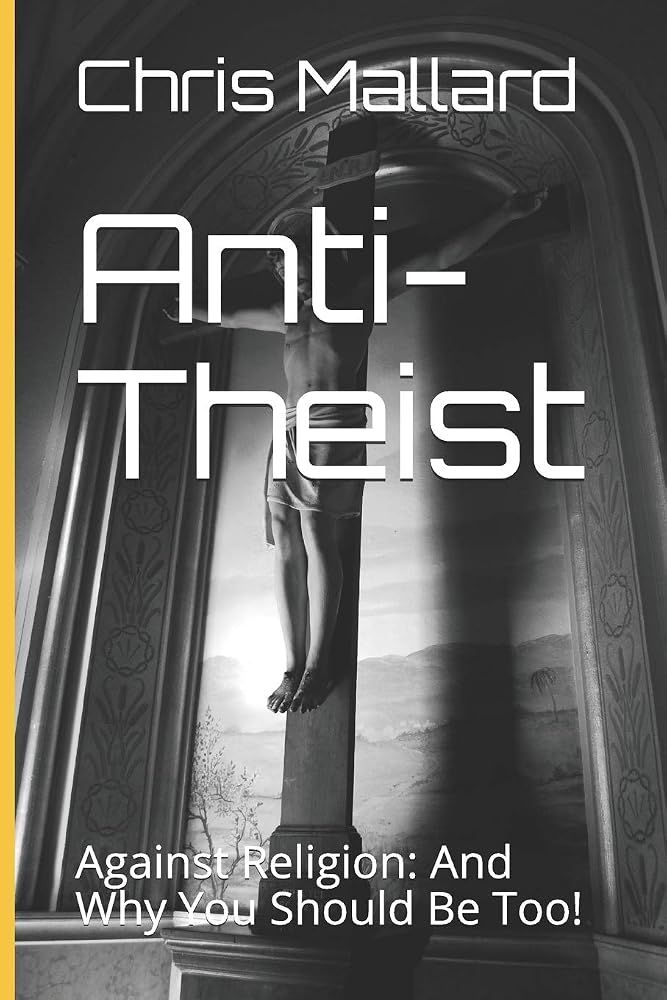
A Series of Biblical Analysis
Eight Sections. Eighty arguments. Built entirely from the text Christians call scripture.
The Eight Sections
1. Sanitized – The Hideous Face of God
Christianity presents God as love itself – but the biblical portrait is of a being who personally drowned nearly every human on earth, ordered the slaughter of entire nations including infants, and promises to torture the majority of humanity for eternity. The Sunday school face and the biblical face are not the same entity.
2. Deceived – God, the Father of Lies
God told Adam he would die the day he ate the fruit. The serpent said he would not die, and would become like God knowing good and evil. Adam ate. He did not die that day. He became like God (Genesis 3:22 confirms it). The serpent told the truth. The Bible’s own account of the first lie assigns the lie to the wrong character.
3. Sacrificed – Christianity’s Child Sacrifice Problem
God commands the firstborn. He kills the firstborn of Egypt himself. He tests Abraham by commanding him to sacrifice Isaac. He allows Jephthah’s daughter to be sacrificed without intervention. He frames his own salvation plan as the sacrifice of his son. Child sacrifice is not peripheral to the biblical narrative – it is structural.
4. Drained – Christianity as a Blood Cult
“Without the shedding of blood there is no forgiveness” (Hebrews 9:22). The entire transactional system between humans and God runs on blood. Christians drink blood weekly. Guilt is transferred from the guilty to the innocent through ritual killing. By any external definition, this is a blood cult.
5. Caged – The Oppression of Women in Christianity
The Bible’s legal framework for women treats them as a categorically subordinate class. A father can sell his daughter into slavery. A rape victim must marry her attacker. Women cannot hold religious authority. These are not cultural artifacts layered onto neutral religion – they are the legal code of the religion itself, still enforced by its largest institutions today.
6. Idolized – How a Prophet Became God
Jesus called himself Son of Man – the explicit human designation from Ezekiel. He said no one is good except God and declined a compliment of goodness. He called himself a prophet. He prayed to the Father, his God. The doctrine of his divinity was voted on at Nicaea in 325 AD – three centuries after his death, by a council he never convened, using a word that doesn’t appear in the Bible.
7. Blemished – The Case Against the Crucifixion as Sacrifice
A valid Levitical sacrifice requires a willing offerer, an unblemished victim, a priest, an altar, and a specific ritual. Jesus begged for an alternative. He was flogged beyond recognition before reaching the cross. He was killed by Gentile soldiers, outside the city, by political execution. The Levitical criteria fail one by one – and then the sacrifice was returned.
8. Conned – The Bible’s Case Against Its Own Miracles
After multiple healings, Jesus commanded secrecy. The people who knew him best – his hometown – were the least convinced. The resurrection was witnessed only by those already in the movement. The operational structure of the Jesus ministry is consistent with a brilliantly managed influence operation. The most successful con is the one people defend.